Italy would tax a video-game seat that pays no prize.
Twenty seats, the legal floor, is €24,000 of entertainment tax a year on this paper's multiplication. The fee table counts ten games in the whole country in 2027.
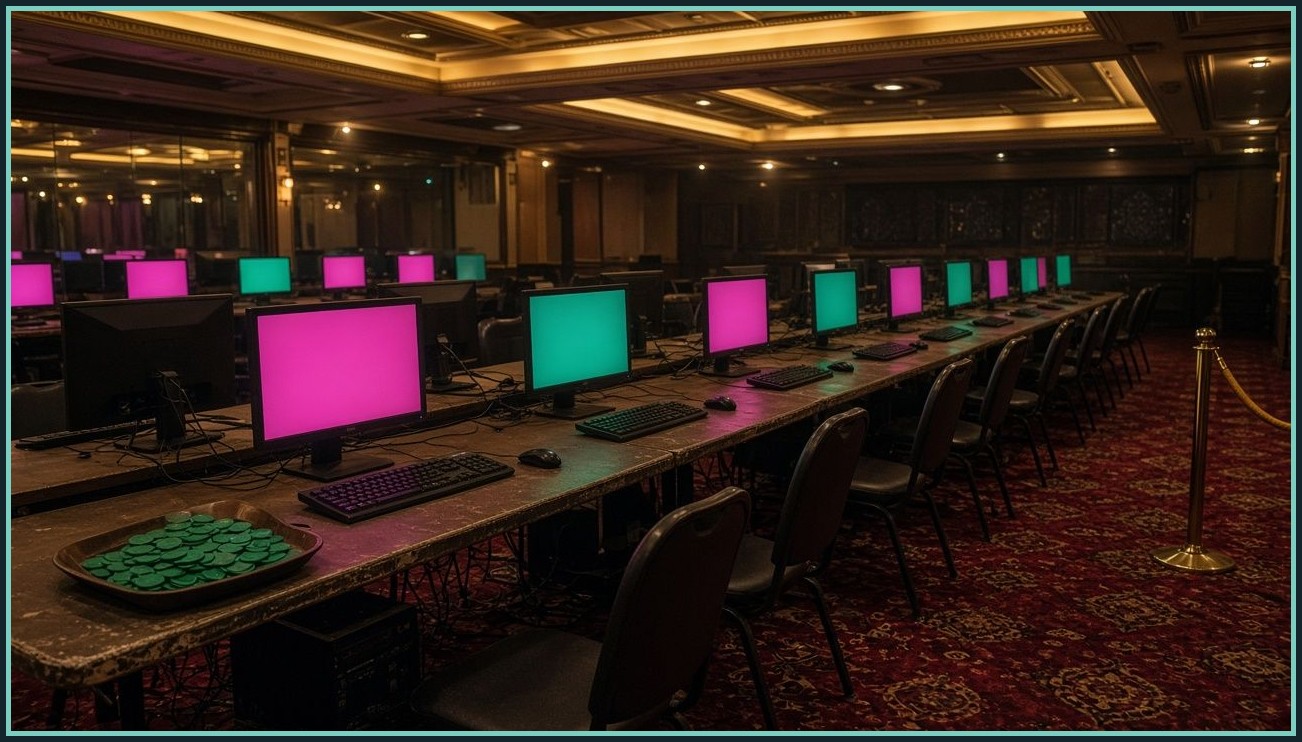
- The room
- A dedicated LAN hall. Consoles, personal computers and licensed simulators, skill games, no cash prize, served from an online platform. At least 20 machines or seats. No betting. Under-18s may enter, only for a game rated for their age. Online-activity logs kept for five years.
- The charge
- A biennial authorisation from the customs and monopoly agency. €200 a machine, €1,000 a hall, €2,000 a game offered, €10,000 an online platform used. Entertainment tax on a deemed €15,000 a year per machine or per seat, and €25,000 for a large simulator. The technical note states the rate as 8 percent.
- The score
- The note says it has no firm count. It assumes 200 halls and 4,000 seats in 2027, then about 2,300 halls and 46,000 seats from 2028, one hall for every municipality over 5,000 people. Entertainment tax about €4.8 million in 2027 and about €55.2 million a year from 2028, both on the €15,000 base.
- The fee table
- €1,070,000 in 2027, on 4,000 machines, 200 halls, 10 games and 5 platforms. €10,830,000 in 2028, on 42,000 machines, 2,100 halls, 90 games and 15 platforms. €1,070,000 in 2029, renewing the 2027 set only. With the tax, the totals are €5,870,000, €66,030,000 and €56,270,000.
- The floor
- Twenty seats at the €15,000 base is €24,000 of entertainment tax a year, before authorisation fees. That product is this paper's.
This paper’s note of 4 November took the slot levy and the concession extension out of a budget extract dated 30 October. The same file holds article 25, between those two. iGaming Business reported on 9 November that the video-game industry wants the article taken out. The rules below are from the extract, which this desk opened again, and from the technical note AGIMEG printed on 31 October.
Article 25 adds a class of machine to the public-security code. It is a console, a personal computer or a simulator, installed only in a room the draft calls a LAN hall, offering games of pure skill with no cash prize, delivered as digital content from an online platform. The room may not take a bet of any kind. It needs at least 20 machines or seats. A player under 18 may come in, and may use only a game rated for that age under the PEGI mark or an equivalent. On a PC used for play, the history of online activity is kept for five years. The customs and monopoly agency authorises the room, the machines, the games and the platforms, for two years at a time. The article sets the payments at €200 for each machine used, €1,000 for each hall, €2,000 for each game offered and €10,000 for each online platform used. The agency is to write the detailed rules, including how tournaments are entered and a control charge of at most 8 percent of the entry fees, within eight months of the law. A hall already open files a declaration within 60 days and may continue, once the entertainment tax is paid, until the 60th day after those rules.
The tax does not follow the till. The article sets a deemed annual base of €15,000 for each machine, or for each seat where one machine opens more than one, and €25,000 for a large simulator and each of its seats. The percent is not printed in the article. It points to point 2 of the entertainment-tax tariff in annex 2 of the 2024 code of minor state taxes. The technical note states that rate as 8 percent, and it writes the first-year sum as 8 percent of 4,000 times €15,000. On the lower base, 8 percent is €1,200 a seat. A hall at the legal minimum of 20 seats, all on that base, owes €24,000 a year before any authorisation fee. That last product is this paper’s.
The note that scores the article says no reliable count of these halls is available. It then assumes, as a cautious start, about 200 halls and 4,000 machines or seats in 2027, an average of 20 each. On that path the entertainment tax is about €4.8 million in 2027. From 2028 it treats the offer as attractive enough to reach about 2,300 halls, one for every municipality with more than 5,000 inhabitants, and about 46,000 seats. The same formula, still on the €15,000 base and not the simulator base, gives about €55.2 million a year. The note says halls of this kind have so far used a transitional regime for machines with no cash prize, and that the regime runs out on 31 December 2026. This desk did not open the decision that set it.
The authorisation fees are a second column, and the table is not the 2,300 read straight. It counts €1,070,000 in 2027, from 4,000 machines at €200, 200 halls at €1,000, 10 games at €2,000 and 5 platforms at €10,000. In 2028 it counts 42,000 machines and 2,100 halls, the step up from the first year rather than the full 46,000 and 2,300, plus 90 games and 15 platforms, for €10,830,000. In 2029 it renews only the 2027 set, another €1,070,000, and the footnote says it prefers not to assume further openings. Added to the entertainment tax, the note’s own totals are €5,870,000 in 2027, €66,030,000 in 2028 and €56,270,000 in 2029. The 10 games and 5 platforms in the first year are national lines in that table. The article’s words are each game offered and each online platform used. The table’s arithmetic closes if those two charges are not repeated in every hall.
iGaming Business says the bill is before the Chamber of Deputies and that amendments are due by 17 November. It says IIDEA, the video-game association, has asked for article 25 to be withdrawn, and that the association’s own count is about 70 LAN centres, of which about 20 meet the 20-seat floor. It puts the Italian esports sector at €32 million to €35 million in 2026, below the annual tax the technical note projects from 2028. This desk did not open IIDEA’s note, and it did not open a Chamber print. The yield above is the technical note’s, as AGIMEG printed it.