Macau authorises Ultimate Texas Hold'em against the bank.
GGRAsia puts the start on 17 November. The order is dated 16 November and starts the day after the 23 November gazette.
- The order
- Despacho da Secretária para a Economia e Finanças n.º 83/2026, Ng Wai Han, signed 16 November 2026. Official Gazette, Series I, No. 47, 23 November 2026, pages 79 to 92. She acts under article 64 of the Basic Law and article 3, paragraph 4, of Law 16/2001, after hearing the Gaming Inspection and Coordination Bureau. Clause 1 authorises the concessionaires referred to in that law to offer Poker UTH, UTH Poker, inside casinos. The Chinese title is 頂級德州撲克. Clause 2 approves the execution rules in the annex. Clause 3 says the order starts the day after publication.
- The start
- Publication is 23 November 2026. The following day is 24 November 2026. GGRAsia, the same day, reports the authorisation and calls the game Ultimate Texas Hold'em. It writes that the authorisation took effect on 17 November. The 17 November date is the day after the signature. This desk read the bilingual PDF and the Portuguese text on the gazette site.
- Opening stakes
- Articles 3 and 4. The round starts only when the player stakes an ante and a blind at the same time, in equal amounts, before the first card. Trips and a progressive jackpot are optional. Either is valid only together with that equal pair. A trips or jackpot stake on its own is void. Ante and blind results are independent of the two side bets. Article 2 says a concessionaire that offers the progressive must install an electronic display and system.
- The raises
- Article 12. After the deal the player may see the two cards of the seat that player occupies and has bet, and may check or place a raise of three or four times the ante. The dealer then shows the first three community cards. A player who did not raise may check or place a raise of twice the ante. The dealer then shows the last two community cards. A player who has raised in neither earlier round must fold or place a raise equal to the ante. A fold sends the ante and the blind to the concessionaire and leaves any trips or jackpot stake in play. The raise sits in its own box on the layout.
- Ante and raise
- Article 13. Each hand's best five cards are made from its two hole cards and the five community cards. The ante pays a prize equal to the stake when the bank has a pair or better and the player wins. The ante is lost when the bank has a pair or better and the player loses. The ante is returned when the bank has less than a pair, and when the hands tie. The raise pays a prize equal to itself when the player wins, is lost when the player loses, and is returned on a tie. The raise rule does not ask whether the bank holds a pair.
- The blind
- Article 13, paragraph 4, and article 16, paragraph 1. The blind pays the scale only when the player beats the bank with a straight or better. It is lost when the player's hand is worse than the bank's, with no pair test on the bank. It is returned on a tie, and when the player wins with less than a straight. The scale is a royal flush at 500 to 1, a straight flush at 50 to 1, four of a kind at 10 to 1, a full house at 3 to 1, a flush at 3 to 2, and a straight at 1 to 1. The Chinese prints the same pairs, including 二賠三 for the flush and 一賠五百 for the royal.
- Trips
- Articles 14 and 16, paragraph 2. The dealer makes the player's best five from the two hole cards and all five community cards. A royal flush pays 100 to 1, a straight flush 40 to 1, four of a kind 30 to 1, a full house 8 to 1, a flush 7 to 1, a straight 4 to 1, and three of a kind 3 to 1. On four of a kind the odd card does not count. GGRAsia's unnamed sources put the house edge on this bet at 3.336 percent, a return of 96.66 percent, and they set that against a 50 to 1 royal and an edge of 3.50 percent. Subtracting 3.336 from 100 leaves 96.664, which rounds to 96.66. None of those three figures is in the order. This desk did not recompute an edge.
- The jackpot
- Articles 15 and 16, paragraph 3. The five cards are the player's two and only the first three community cards. A royal flush pays a fixed sum or 100 percent of the pool, whichever is higher. A straight flush pays a fixed sum or 10 percent, whichever is higher. Four of a kind, a full house and a flush pay a fixed sum. The order sets none of those sums, no seed, and no contribution from each wager. If more than one hand qualifies, payment starts at the dealer's left and moves clockwise. A straight flush in the same round is paid before a royal flush. If more than one hand is a straight flush, each of those players receives 10 percent of the pool or the fixed sum, whichever is higher. The pool falls by the share paid. If it is empty, it restarts at the minimum the concessionaire sets.
- Main-game edge
- GGRAsia attributes this to the same unnamed sources, assuming optimal play. The main game, ante and blind and the raise, has a house edge of 2.185 percent of the ante, or 0.526 percent of the money wagered, and a return of 99.47 percent. Subtracting 0.526 from 100 leaves 99.474, which rounds to 99.47. The order prints no house edge.
- The table
- Articles 2, 5, 10 and 11. One deck of 52 cards and a cut card, or an automatic shuffler with no cut card. Six to eight places, one of them the bank for the concessionaire, the others opposite the bank for players. Each betting place except the bank is marked with an Arabic numeral from 1 to 9. Five community cards are set face down. Two cards go to each bet hand. The bank's two cards are dealt and shown only after the three raise rounds. A player who bets more than one hand may look at only one of them. A round off a layout is void.
Ng Wai Han has authorised Macau’s casino concessionaires to deal Poker UTH inside their casinos. Despacho 83/2026 is in the Official Gazette, Series I, number 47, dated 23 November 2026, on pages 79 to 92. She signed it on 16 November, after hearing the Gaming Inspection and Coordination Bureau. The recital uses article 64 of the Basic Law and article 3, paragraph 4, of Law 16/2001. Clause 1 authorises the concessionaires under that law. Clause 2 approves the execution rules in the annex. Clause 3 says the order starts the day after it is published. Publication is 23 November, so the order is in force from 24 November. The Chinese title on the order is 頂級德州撲克. GGRAsia reported the authorisation the same day and called the game Ultimate Texas Hold’em. It wrote that the authorisation took effect on 17 November. That date is the day after the signature. The clause that sets the start names the day after publication.
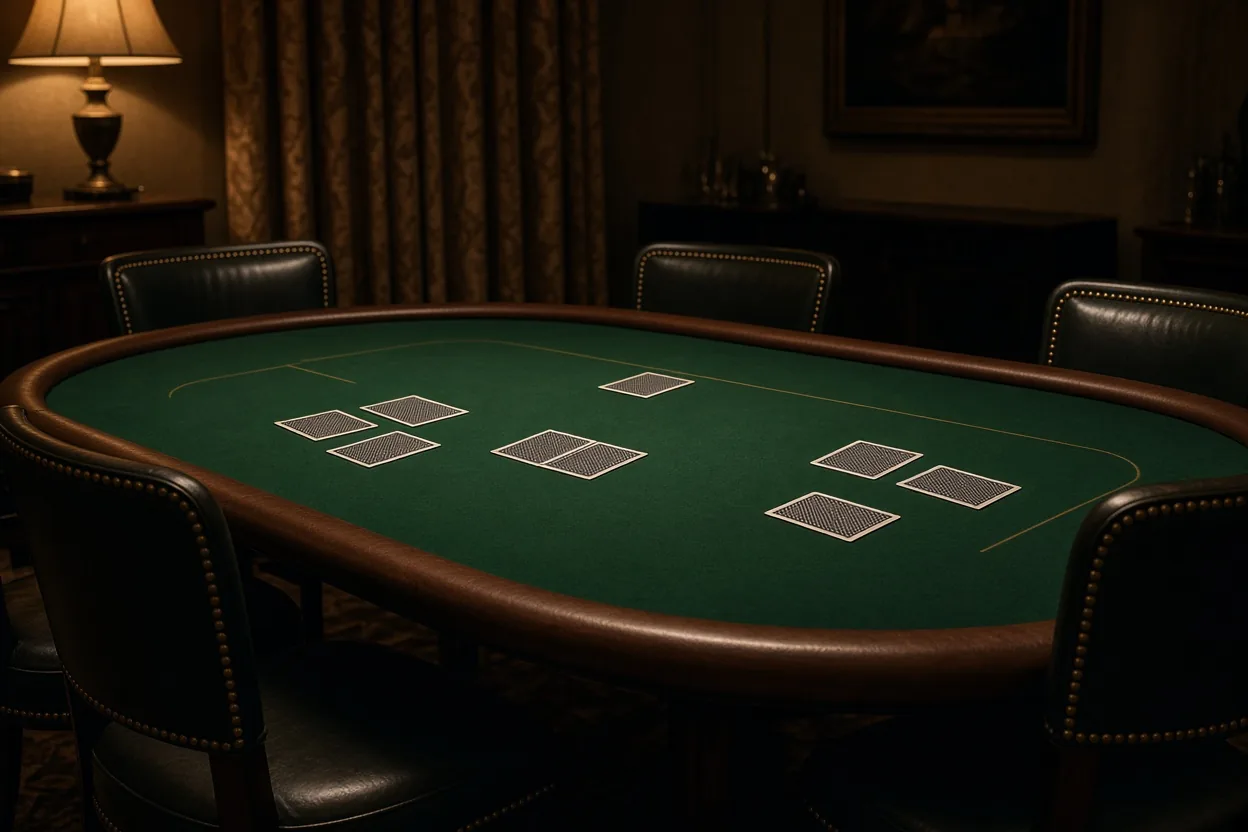
The round is against the bank, on a layout, with one deck of 52 cards. A round played off that layout is void. Each table has six to eight places. One is the bank, for the concessionaire. The places opposite the bank are for the players, and each of those betting places is marked with an Arabic numeral from 1 to 9. Five community cards go in the centre, face down. Each bet hand receives two cards. The bank’s two cards are dealt and turned only after three rounds of raises. The house may shuffle by hand, with a cut card, or by machine, with no cut card.
The round starts only when the player puts up an ante and a blind together, in the same amount, before the first card is dealt. Trips and a progressive jackpot are optional. Either of them counts only as an addition to that equal pair. A trips chip or a jackpot chip on its own is void, and those two results are worked out apart from the ante and the blind. A concessionaire that offers the progressive has to install an electronic display and system for it.
Once the cards are out, the player may look at the two cards of the seat that player occupies and has bet. The player may check, or place a raise of three or four times the ante in the raise box. The dealer then turns the first three community cards. A player who has not raised may check, or place a raise of twice the ante. The dealer then turns the last two community cards. A player who has raised in neither of the earlier rounds must fold or place a raise equal to the ante. A fold gives the ante and the blind to the concessionaire. A trips stake or a jackpot stake stays up. The dealer takes the two cards back at once unless one of those side stakes is there. A player who has bet more than one hand in the same round may look at only one of them.
The ante and the raise are even-money contests, with one difference between them. Each side’s hand is its best five cards from its own two and the five community cards. The ante pays a prize equal to the stake when the bank holds a pair or better and the player wins. The concessionaire takes the ante when the bank holds a pair or better and the player loses. The ante comes back when the bank has less than a pair, and when the two hands are equal. The raise pays a prize equal to itself when the player wins, goes to the concessionaire when the player loses, and comes back on a tie. Nothing in the raise rule asks whether the bank holds a pair.
The blind has a higher bar, and it has no pair test on the bank. It pays the scale in article 16 only when the player beats the bank with a straight or better. It is lost when the player’s hand is the worse of the two. It comes back when the hands tie, and when the player wins with anything short of a straight. For a win that meets the bar, a royal flush pays 500 to 1, a straight flush 50 to 1, four of a kind 10 to 1, a full house 3 to 1, a flush 3 to 2, and a straight 1 to 1. The Chinese column prints the same pairs. The flush is 二賠三, and the royal is 一賠五百.
Trips is the player’s own hand. The dealer takes the two hole cards and all five community cards and pays the best five, on a scale of its own. A royal flush pays 100 to 1, a straight flush 40 to 1, four of a kind 30 to 1, a full house 8 to 1, a flush 7 to 1, a straight 4 to 1, and three of a kind 3 to 1. Where the hand is four of a kind, the fifth card does not count. GGRAsia’s unnamed sources put the house edge on this bet at 3.336 percent and the return at 96.66 percent, and they compared the 100 to 1 royal with a 50 to 1 royal and an edge of 3.50 percent. Subtracting 3.336 from 100 leaves 96.664, which rounds to the 96.66 they print. The order contains the 100 to 1. It does not contain 3.336 percent, 50 to 1, or 3.50 percent. This desk did not work an edge of its own.
The progressive is a different five cards. It uses the player’s two and only the first three community cards. A royal flush pays a fixed sum or the whole pool, whichever is higher. A straight flush pays a fixed sum or 10 percent of the pool, whichever is higher. Four of a kind, a full house and a flush pay a fixed sum. The order does not set the sums, the amount that starts the pool, or the share of each wager that feeds it. If more than one hand qualifies, the dealer pays from the dealer’s left, clockwise. If the same round contains both a royal flush and a straight flush, the straight flush is paid first. If more than one hand is a straight flush, each of those players receives 10 percent of the pool or the fixed sum, whichever is higher. The pool is reduced by the share that was paid. When nothing remains, it starts again at the minimum the concessionaire has set. GGRAsia’s sources said the jackpot could not yet be priced, for want of those amounts. On the ante, the blind and the raise, the same sources put the house edge, assuming best play, at 2.185 percent of the ante, or 0.526 percent of the money wagered, with a return of 99.47 percent. Subtracting 0.526 from 100 leaves 99.474, which rounds to 99.47. The order prints no house edge.