Pauma opens a sportsbook the federal procedures do not name.
The casino calls the room Pauma Sportsbook. The industry report called it Grove. The house rules keep a phone bet off this opening, and they mark the sport-by-sport pages as a draft.
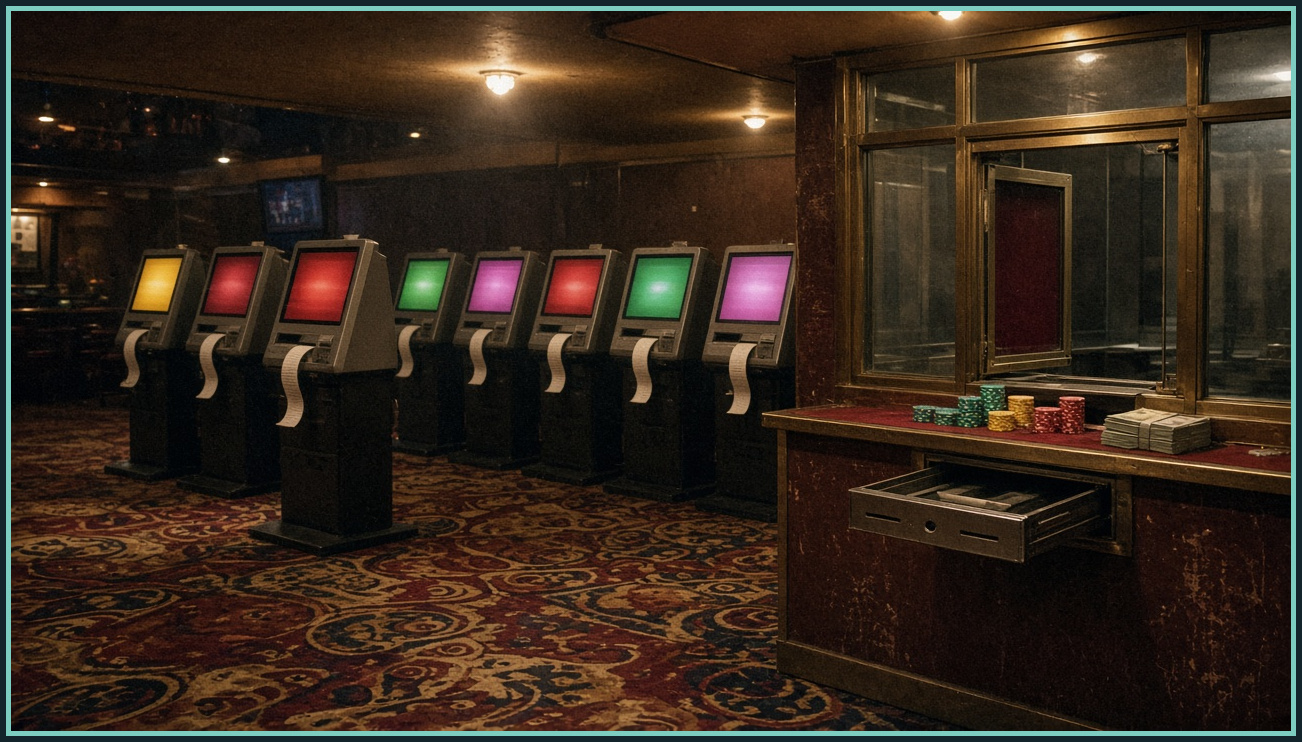
- The floor
- Casino Pauma, 777 Pauma Reservation Road, Pauma Valley, California. The casino page says Pauma Sportsbook is open to guests 18 and older, at eight self-service kiosks, with winnings redeemed at the cage.
- The opening
- SCCG Management, which says it planned the book with the tribe, dates a ribbon cutting to 12 November 2026. Gambling Insider reported the opening on 14 November and called the room Grove Sportsbook. The casino page does not date the ceremony.
- The procedures
- Department of the Interior, 8 July 2025. Section 3 allows only the Class III gaming Section 4 names. Section 4.1 lists gaming devices, banking or percentage card games, lottery games, and other Class III gaming California permits for any purpose. Sports wagering is not a heading.
- A later game
- Section 4.1(e) requires notice to the National Indian Gaming Commission at least 60 days before a Class III game added after the procedures take effect, with the tribal internal controls. The casino page does not say that notice was sent.
The Pauma Band is taking sports wagers at Casino Pauma, on the reservation in Pauma Valley. The casino’s page says Pauma Sportsbook is open to guests 18 and older. A guest uses one of eight self-service kiosks. The page names football, basketball, hockey, soccer, baseball, boxing and mixed martial arts, and it names straight bets, parlays, teasers, player and team props and live in-play bets. Winnings are redeemed at the cage. The address on the page is 777 Pauma Reservation Road.
Gambling Insider reported the opening on 14 November and called the room Grove Sportsbook. It also called the launch California’s first retail sportsbook. The casino page does not use either phrase. The launch note from SCCG Management, the Las Vegas firm that says it planned the book with the tribe, uses the name Pauma Sportsbook. The Grove is a dining room at the same property. SCCG dates a ribbon cutting to 12 November 2026 and says Shawne Merriman, a former Chargers linebacker, placed the first wager, on the Los Angeles Chargers to beat the Baltimore Ravens on 16 November. Chairman Temet Majel, in that note, treats the book as a decision a sovereign tribal nation makes for its own enterprises. The casino page says the book is open. It does not date the ribbon, and it does not name the first bet.
The house rules posted next to that page separate the counter from the small print. The guest rules say a patron must be 18 to bet or to cash a ticket, unless tribal law or a regulator requires more. A kiosk may print a winning voucher. It does not pay cash. For this launch, the cage redeems the voucher. A dispute that management does not close goes to the Pauma Gaming Commission, which the rules say decides it. Those guest rules also say mobile wagering is not part of the retail opening. If a phone bet is offered later, the rules require an identity check and a geolocation inside the authorized area. SCCG puts that product in the winter, and only while the guest is on the property. The season is in the advisor’s note. It is not on the casino’s sportsbook page.
The same rules page then prints a second set of sport-by-sport conditions. It labels them an ISI house-rules draft last modified in February 2026, and it says that section still needs verification by ISI and the Pauma Gaming Commission before public release. The guest rules already refer to ISI platform rules for grading and settlement. Because the page marks the reproduced draft as unverified, this desk does not treat its minimums, examples or settlement tables as the rules the cage is using. The draft names the platform company as ISI Maritime/Islands Ltd.
The authorization on file is older than the kiosks. On 8 July 2025 the Department of the Interior prescribed Class III gaming procedures for the Pauma Band of Luiseño Mission Indians of the Pauma and Yuima Reservation. The letter to Chairman Majel says the procedures are in effect. They follow Pauma Band of Mission Indians v. Newsom in the Eastern District of California. The letter says the court held on 22 April 2024 that the state had not negotiated in good faith, that a mediator selected the tribe’s last best offer on 30 September 2024, and that the state refused that compact on 23 October 2024. The letter says the Secretary cannot force the state to take the regulatory role the compact described, and that the National Indian Gaming Commission agreed to perform many of those duties, to be written into a memorandum with the tribe.
Section 3 of the procedures says the tribe may conduct only the Class III gaming expressly referred to in Section 4, and shall not conduct Class III gaming that section does not expressly authorize. Section 4.1 then lists gaming devices, any banking or percentage card game, and lottery games, with a limit on offering those lottery games over the internet. A fourth clause covers any other Class III gaming that California permits for any purpose by any person, organization or entity. The example written there is a controlled game at a nonprofit fundraiser. Sports wagering is not a heading. The procedures define a lottery by California Penal Code section 319, a scheme for disposing of property by chance. They do not say a wager on the result of a match is that scheme.
Section 4.1(e) is the path for a game added after the procedures take effect. The tribe must notify the National Indian Gaming Commission at least 60 days before such a game is offered, and the notice must include the tribal internal controls. The casino page does not say that notice was given for the sportsbook. This desk has not seen one.
The procedures recite California Constitution article IV, section 19(f). As quoted there, the clause authorizes the governor to negotiate compacts for slot machines, lottery games, and banking and percentage card games on Indian lands, and it says those games are permitted on tribal lands subject to the compacts. It does not name a sportsbook. Section 4.1(d) would still cover a form of Class III gaming the state already allows for any purpose by any person. The procedures do not cite a sports-wagering statute for that clause. The tribe’s announcement does not fill the gap. It describes the book as self-determination. It does not point to the sentence in Section 4.1 that would cover the kiosks.